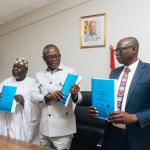
Statement by the President of the Armwrestling Federation of Africa (AFA) on International Women's Day
Theme: Empowering the African Woman through the Strength of Armwrestling



The Advertising Association of Ghana (AAG) has called on President John Dramani Mahama and the Ministry of Local Government, Chieftaincy and Religious Affairs to step in over what it describes as a chaotic and opaque demolition of billboards in the Greater Accra Region.
In a statement issued on Friday, February 13, the umbrella body for Ghana’s advertising industry said it supports efforts to regulate and sanitise the outdoor advertising space. However, it expressed serious concern about how the current enforcement exercise is being carried out.
The AAG acknowledged longstanding public concerns about the rapid proliferation of billboards in Accra, including issues of structural safety, blocked sightlines, revenue leakages and fragmented oversight among metropolitan, municipal and district assemblies (MMDAs). It agreed that reforms are necessary to improve road safety and restore visual order in urban areas.
Nonetheless, the association insisted that enforcement actions must be transparent, predictable and guided by clear regulatory standards.
According to the AAG, the demolition campaign began without sufficient consultation with key industry stakeholders, particularly licensed operators who own and manage both static and digital billboard installations. It said there was no structured engagement before the exercise commenced, leaving operators without adequate opportunity to regularise installations, verify compliance status or respond to alleged breaches.
A key concern raised by the association is the absence of a clearly communicated roadmap for the exercise. The AAG cited a lack of information on timelines, phased implementation plans, compliance benchmarks and enforcement criteria. Without such clarity, it argued, operators cannot determine whether demolitions are based on objective regulatory violations or discretionary decisions.
Outdoor advertising in Ghana is regulated through a combination of local assembly by-laws, building codes and national urban planning laws. Industry estimates indicate the sector contributes tens of millions of cedis annually in permit fees and taxes, while supporting thousands of jobs across design, engineering, fabrication, installation, printing and maintenance.
The AAG warned that unpredictable enforcement actions could destabilise this ecosystem.
The association also flagged what it described as irregularities in the demolition process, suggesting that enforcement actions may appear selective and potentially influenced by political considerations or vested interests within segments of the advertising market.
Although the statement did not cite specific examples, it cautioned that any perception of bias could erode public trust in regulatory institutions and distort fair competition.
Industry analysts note that outdoor advertising in the Greater Accra Region has expanded rapidly over the past decade, fuelled by rising corporate marketing budgets, election-related advertising and the growth of digital LED billboards. However, regulatory systems have struggled to keep pace, leading to disputes over siting approvals and compliance standards.
Beyond governance concerns, the AAG highlighted the economic risks of abrupt demolitions. Billboard structures represent significant capital investments, with large-format steel installations costing between GH¢150,000 and GH¢500,000, while digital LED boards can exceed GH¢1 million. Many operators finance these projects through bank loans or long-term commercial contracts.
The association warned that inconsistent enforcement could undermine investor confidence at a time when Ghana is seeking to strengthen private sector growth. It added that thousands of direct and indirect jobs could be at risk if the demolitions proceed without structured consultation and phased compliance measures.
Describing the situation as requiring an “institutional reset,” the AAG appealed directly to President John Dramani Mahama and the sector ministry to restore order and ensure regulatory integrity.
The association urged authorities to clearly define the mandate of any committee overseeing the exercise, establish transparent engagement channels with stakeholders, and implement a fair, structured and phased demolition strategy grounded in due process.

Theme: Empowering the African Woman through the Strength of Armwrestling